 +90 534 412 07 07
 info@ravilla.com.tr
 E-Katalog
 Tables
 Chairs
 Side Tables
 Seating Groups
 Garden Furniture
 Consoles

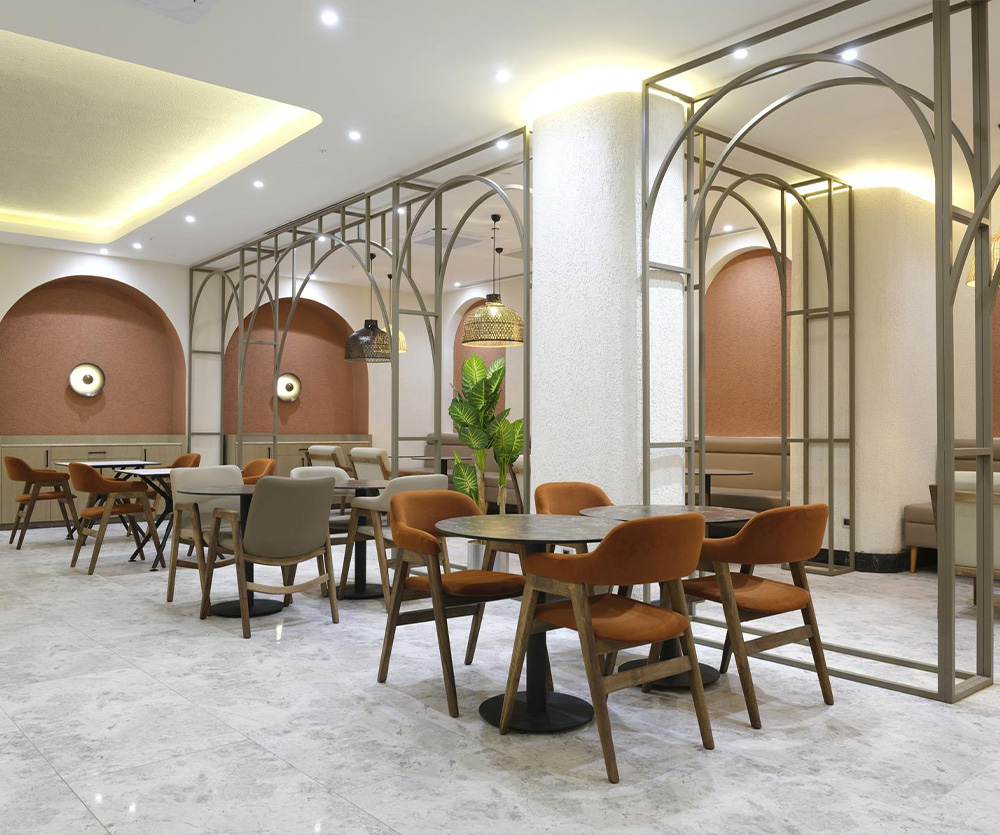
The most commonly used tables in hotels, cafés, and restaurants worldwide vary depending on the concept and operational needs of the business. However, according to industry standards and 2026 trends, the following models stand out:
1. Most Preferred Shapes and Dimensions
Hotels, cafés, and restaurants primarily prefer square and rectangular tables, accounting for approximately 70% of global usage. The main reason is flexibility; for example, two-person square tables can easily be combined to create larger table arrangements for groups.
- Square Tables: Sizes such as 70×70 cm and 80×80 cm are considered industry standards. In cafés and quick-service locations, this size may decrease to 60×60 cm.
- Rectangular Tables: Dimensions such as 120×80 cm and 140×90 cm are widely accepted industry standards. These are among the most commonly used table models in hotels and restaurants worldwide.
- Round Tables: Preferred for encouraging social interaction and improving traffic flow within the space. Common diameters are 60–80 cm for 2 people and 90–110 cm for 4 people.
2. Popular Materials
As of 2026, the following materials stand out for combining durability and aesthetics:
- Solid Wood Tables (Oak and Walnut): Solid and slab tables made from walnut and oak remain indispensable for premium hospitality venues due to their timeless appearance and repairability. Warm natural textures such as walnut, honey oak, and ash wood are especially popular.
- Compact Laminate Tables: One of the most preferred economical solutions for high-traffic venues thanks to their high resistance to scratches, heat, and moisture.
- Marble and Natural Stone Tables: Used to elevate the perception of luxury. However, due to the staining risks associated with natural marble, quartz, ceramic, porcelain, and marble-look surfaces have become increasingly popular in recent years. These materials are more resistant to acidic liquids and offer greater durability.
- Wood Veneer, MDF, and Werzalit: These models are widely used because of their cost-efficiency and fast production process.
- Metal and Wood Combinations: Influenced by industrial design trends, wooden tops combined with metal bases provide both durability and a modern aesthetic.
3. Design Trends (2026)
- Organic Forms: Softened edges and asymmetrical live-edge designs are becoming increasingly popular instead of sharp corners.
- Sustainability: Recycled wood and rapidly renewable materials such as bamboo have become the first choice for environmentally conscious brands.
- Sculptural Bases: Rather than the tabletop itself, single-cast pedestal bases and artistic metal structures are becoming the defining design elements of hospitality spaces.
4. Distribution by Concept
- Hotels and Restaurants: Solid wood or marble/porcelain tables in rectangular, square, and round forms are commonly preferred.
- Cafés and Bistros: Compact laminate and wooden tables in 60×60 cm dimensions are frequently used.
- Fast Food Venues: Easy-to-clean and durable rectangular compact laminate tables are the leading choice.
In summary; for businesses seeking operational efficiency, 70×70 cm square compact laminate tables are among the most preferred options, while venues looking for prestige and a unique concept often favor naturally textured solid walnut or porcelain-top round tables.